Introduction
The Evolution of Soy Candles
Soy candles date back to ancient civilizations like the Chinese and Romans who used tallow and beeswax to create rudimentary versions of candles. However, soy candles as we know them today gained popularity in the late 20th century due to an increased demand for eco-friendly and sustainable alternatives in candle making.
Advantages of Soy Candles Over Paraffin Candles
Soy candles offer numerous benefits that set them apart from traditional paraffin candles. Unlike paraffin, soy wax is derived from soybean oil, making it a renewable resource that supports farmers and is biodegradable. Additionally, soy candles burn cleaner with less soot, providing a healthier indoor air quality compared to paraffin candles.
An Overview of Candle-Making Process

The process of creating soy candles involves several key steps: melting the soy wax, adding fragrance oils and dyes for customization, selecting the appropriate wick size based on container dimensions, pouring the melted wax into containers with wicks securely anchored at the bottom, and allowing the candles to cool and solidify properly before lighting them up.
Essential Tools and Materials Needed
To begin your journey in soy candle making, gather essential tools and materials. Obtain high-quality soy wax for optimal candle performance.
Select from various soy wax types, such as container blend, pillar blend, or specialty blends like massage wax. These different types offer varying qualities in terms of burn time, fragrance retention, and appearance.
Soy Wax Types and Qualities
Investigate the qualities of different soy waxes to understand their characteristics fully. Container blend soy wax is ideal for creating candles in jars or containers. It adheres well to the container walls and holds fragrance oils efficiently.
Pillar blend soy wax is suitable for crafting freestanding candles with a smooth finish. Specialty blends like massage wax offer added benefits such as skin moisturization when melted.
Wicks, Containers, Fragrance Oils, and Dyes
Select wicks based on the diameter of your candle container to ensure proper burning. Choose from cotton wicks for a clean burn or wooden wicks for a crackling ambiance. Acquire containers that suit your aesthetic preferences and candle-making goals – glass jars are popular choices due to their transparency.
Explore a variety of fragrance oils ranging from floral scents to woody notes to enhance the olfactory experience of your soy candles. Incorporate dyes to add vibrant colors that complement the chosen fragrances.
Thermometer, Double Boiler, Stirring Utensils
Utilize a thermometer to monitor the temperature during the candle-making process accurately. Maintaining specific temperatures while melting and cooling soy wax is crucial for optimal results.
Employ a double boiler setup to melt the soy wax gently without direct heat exposure that could affect its quality. Use stirring utensils such as heat-resistant spoons or spatulas to mix fragrance oils and dyes evenly into the melted wax for consistent distribution.
Melting Soy Wax Safely and Efficiently
To melt soy wax safely, use a double boiler or a microwave-safe container to avoid direct heat contact. Place your soy wax flakes or blocks into the top pan of the double boiler or a microwave-safe container.
Heat the wax slowly over low to medium heat or in short intervals in the microwave, stirring occasionally to ensure even melting. Avoid overheating the soy wax as it can cause discoloration and affect fragrance retention.
Adding Fragrance Oils and Dyes for Desired Scents and Colors
When adding fragrance oils for your soy candles, use about 1 oz of fragrance oil per 1 lb of soy wax for optimal scent throw. Carefully pour the measured fragrance oil into the melted soy wax and stir gently but thoroughly to distribute the scent evenly throughout the wax. For adding dyes, use dye chips or liquid candle dyes sparingly to achieve your desired color intensity while ensuring that they are compatible with soy wax to prevent clumping or uneven coloring.
Choosing the Right Wick Size for Your Container Size
Selecting the appropriate wick size is crucial in soy candle making to ensure proper burning performance. Match wick size with your container diameter: smaller containers require thinner wicks while larger containers need thicker wicks.
For example, a container with a 2-inch diameter would typically need a small-sized wick, while a 4-inch diameter would require a medium-sized wick. Testing different wick sizes in sample candles can help determine which one burns most effectively for your specific container size.
Preparing Your Work Area for Candle Making
Organize your soy candle making tools and materials on a clean, flat surface. Place down newspaper or a protective covering to catch any spills or drips.
Ensure good ventilation in the room to prevent inhaling fumes from melting wax. Have all necessary equipment within reach, including your soy wax, fragrance oils, dyes, thermometer, stirring utensils, and containers.
Create a safe work environment by removing any flammable objects from the area. Keep a fire extinguisher nearby as a precaution.
Put on protective gear like gloves and an apron to shield yourself from hot wax spills. Double-check that your work area is free of distractions so you can focus solely on the soy candle making process.
Measuring and Melting Soy Wax Correctly
Measure out the required amount of soy wax based on the size and number of candles you plan to make. Use a kitchen scale for precise measurements, ensuring you have enough wax to fill your containers adequately. Place the measured soy wax into a double boiler or microwave-safe container for melting.
Melt the wax slowly over low heat to avoid scorching or overheating. Stir the melted soy wax gently and consistently to promote even melting and distribution of fragrance oils later on in the process.
Use a candy thermometer to monitor the temperature of the melted wax; maintain it within the recommended range specified by your specific soy candle making instructions. Avoid overheating as it can affect the quality and scent throw of your finished candles.
Adding Fragrance Oils and Dyes to Create Custom Scents
Select high-quality fragrance oils that are specifically formulated for use in soy candle making. Carefully measure out the recommended amount of fragrance oil based on your recipe or desired scent strength; add gradually while stirring continuously for proper dispersion throughout the melted wax.
Choose complementary dyes if you wish to color your candles; remember that less is more when adding dyes as they can impact burning properties if added excessively. Experiment with different scent combinations and dye ratios to create unique custom candles that reflect your personal preferences or match specific occasions.
Pouring The Wax Into Containers with Wicks
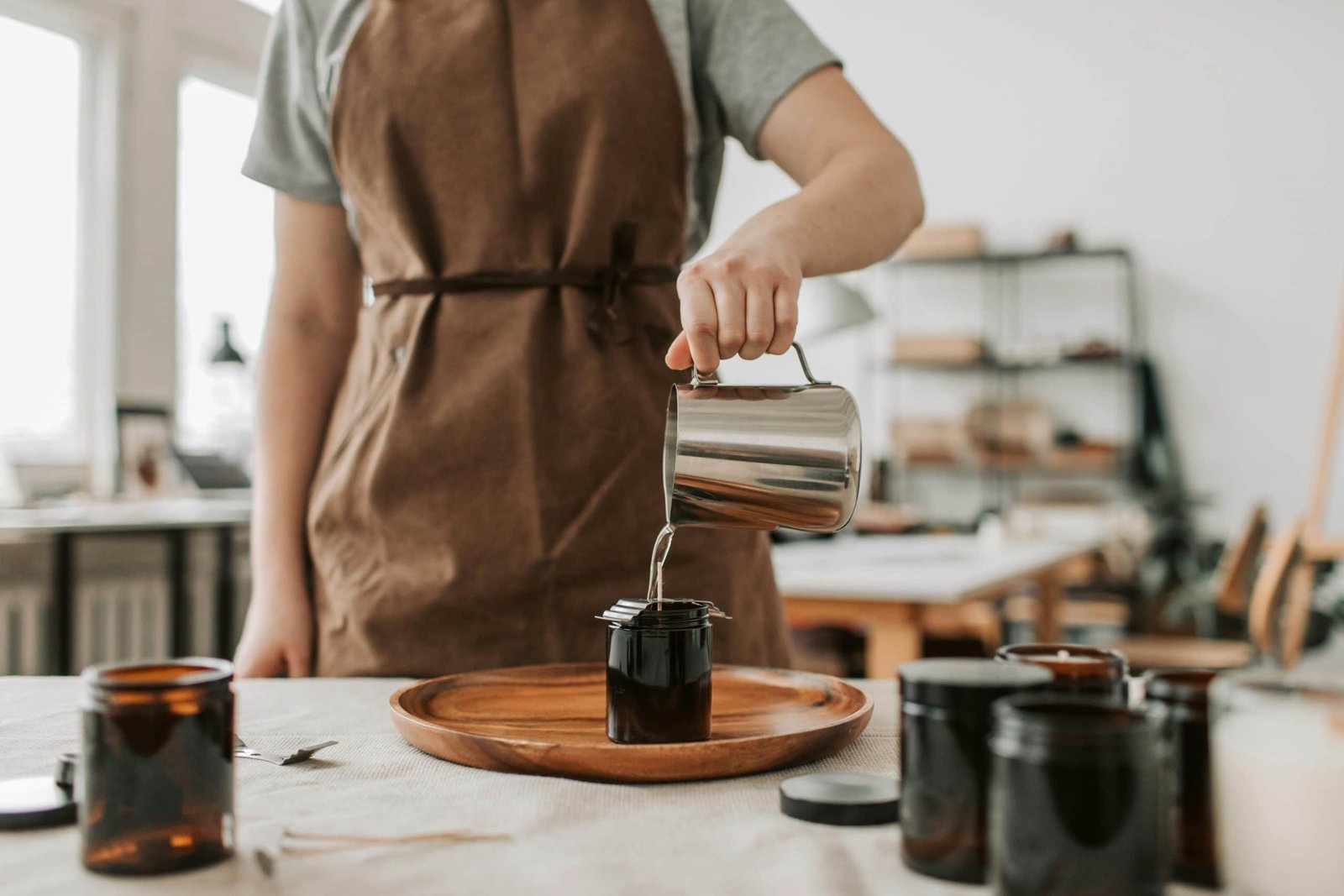
Secure pre-tabbed wicks in place at the center of each container using adhesive dots or hot glue; ensure they are straight and taut for optimal burning performance later. Carefully pour the scented soy wax into each prepared container slowly without splashing or spilling; leave some space at the top (known as “top-off”) for aesthetic purposes once cooled. Avoid moving containers once filled until candles have completely set; this helps prevent uneven burning patterns caused by disturbances during cooling stages.
Cooling And Curing The Candles Properly
Allow freshly poured candles sufficient time to cool at room temperature undisturbed until they reach full solidification; this process may take several hours depending on ambient conditions. To enhance scent throw and burn quality, consider curing completed candles for 24-48 hours before lighting them; this allows fragrances to fully infuse into hardened wax. Once cooled and cured properly, trim wicks down to around 1/4 inch before lighting them for cleaner burns with minimal sooting—a crucial step in ensuring long-lasting enjoyment from your handcrafted soy candles.
Sinkholes or Air Pockets in Candles
Sinkholes or air pockets in candles can be frustrating, but there are ways to troubleshoot and prevent them. To avoid sinkholes, ensure your soy wax is poured at the correct temperature and that you stir the wax gently while adding fragrance oils.
Another culprit of sinkholes could be rapid cooling; make sure your candles cool slowly and evenly to reduce the chances of sinkholes forming. If sinkholes do appear, you can use a heat gun to carefully melt the surface of the candle and fill in the holes.
Wet Spots or Frosting on Candle Surfaces
Wet spots or frosting on candle surfaces are common issues in soy candle making that can detract from their aesthetic appeal. To prevent wet spots, try pouring your wax at a slightly higher temperature and avoid drastic changes in temperature during cooling.
Frosting, which appears as a white powdery residue on candles, is a natural characteristic of soy wax but can be minimized by using a heat gun to smooth out the surface after cooling. Embracing frosting as part of the charm of soy candles can also enhance their organic appeal.
Poor Scent Throw or Uneven Burning
Poor scent throw or uneven burning in soy candles can be disappointing when striving for a fragrant and consistent burn experience. To enhance scent throw, consider using high-quality fragrance oils designed for use in soy wax and adjusting the fragrance oil-to-wax ratio based on personal preference.
For even burning, trim wicks to an appropriate length before each use and ensure they are centered in the container during candle making. Experiment with different wick sizes and types to find what works best for your specific soy candle making process.
Layered Candles: A Symphony of Scents and Colors
Create visually stunning and delightfully fragrant soy candles by layering different scents or colors in a single container. Start by pouring a layer of one scented and colored wax into the container, allowing it to cool and solidify before adding the next layer.
Repeat this process for each subsequent layer, ensuring that each one complements the ones below it. The result is a captivating candle that not only looks beautiful but also releases a symphony of scents as it burns, making the soy candle making process a true art form.
Marbling Magic: Infusing Elegance into Your Candles
Elevate your soy candle making skills by mastering the marbling technique using multiple colored waxes. Begin by melting different colored waxes separately and pouring them into a larger container without mixing them completely.
Using a skewer or toothpick, gently swirl the colors together to create intricate patterns reminiscent of marble stone. When poured into individual candle containers, each candle will showcase unique swirls and designs, adding an element of elegance and sophistication to your creations.
Botanical Bliss: Nature’s Touch in Every Candle
Enhance the beauty and charm of your soy candles by incorporating botanicals or decorative elements into them. From dried flowers and herbs to glitter or gemstones, there are endless possibilities for adding visual interest and texture to your candles.
Simply place these elements strategically in the wax as it cools or on top of the candle once it has partially solidified. Not only do these additions make your candles visually appealing, but they also infuse each creation with a touch of nature’s beauty, making every step in soy candle making an expression of creativity.
Blending Custom Fragrances: Crafting Unique Scents
Enthusiasts in soy candle making experiment with various essential oils and fragrance oils to create signature scents. Different combinations can evoke memories or set moods, adding a personal touch to the candles. Blending lavender with vanilla may produce a calming aroma perfect for relaxation.
Making Specialty Shaped Candles: Unleashing Creativity
Crafting unique shapes such as stars, flowers, or geometric figures adds an artistic flair to soy candle making. Using silicone molds allows for intricate designs and details that are sure to impress candle enthusiasts. Experimenting with different shapes can elevate the visual appeal of the candles.
Experimenting with Wax Blends: Pushing Boundaries
Exploring blends of soy wax with beeswax or coconut wax can lead to innovative results in soy candle making. Each blend offers distinct characteristics in terms of burn time, scent throw, and texture. By experimenting with different wax combinations, candle makers can achieve exceptional results not possible with a single type of wax.
Conclusion
Advanced techniques in soy candle making open up endless possibilities for creativity and personal expression. By blending custom fragrances, creating specialty shaped candles, and experimenting with various wax blends, crafters can produce unique and captivating creations that delight the senses. Embrace the journey of exploration and discovery in soy candle making—it’s a craft that sparks joy and ignites creativity!